
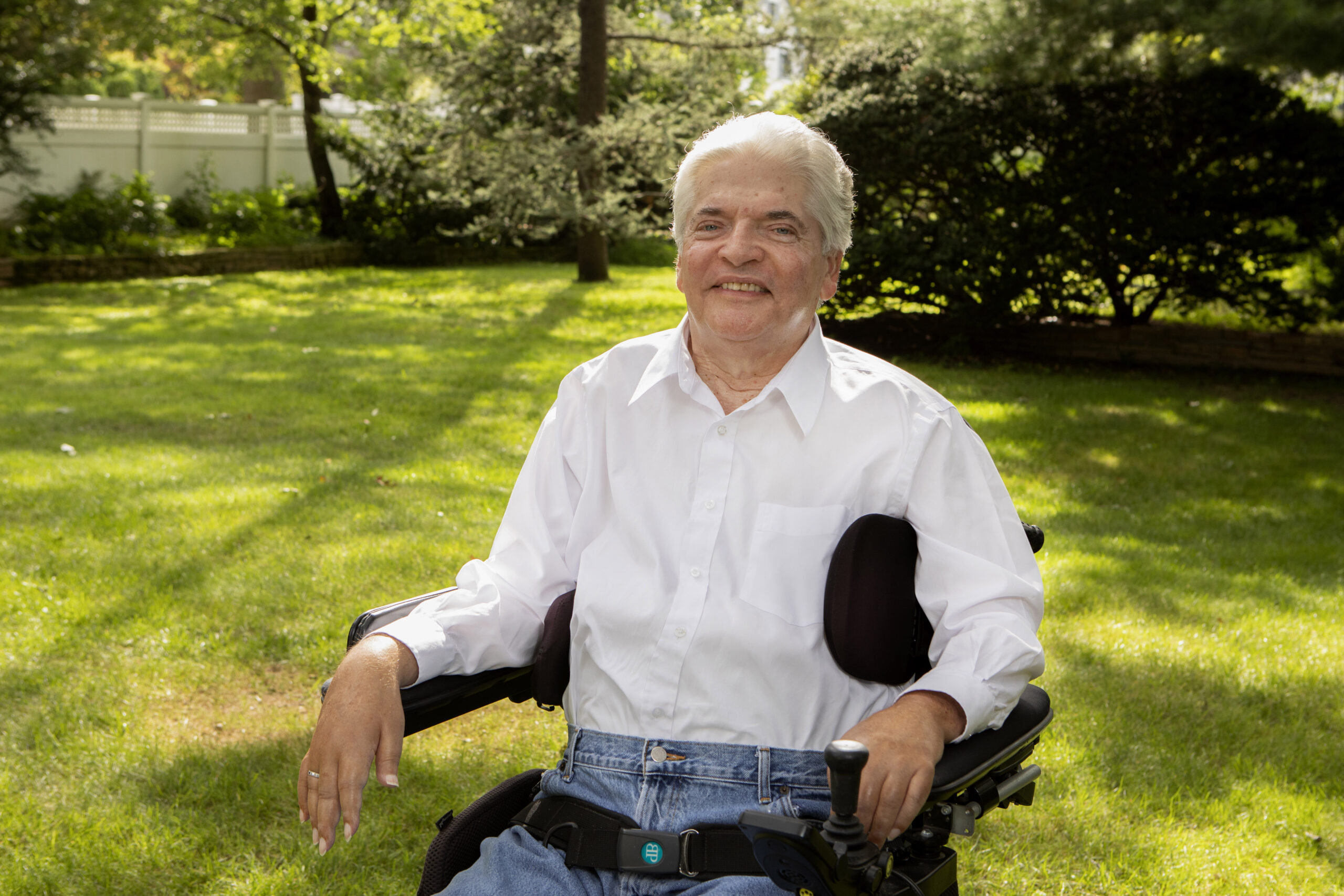
Some stories are not just about a person. They are about a moment in time and everything that had to change because of it.
Ken Kunken’s story is one of those stories.
In 1970, when Ken was injured during a college football game at Cornell University, the world looked very different for people living with disabilities. At that time, there were no federal laws guaranteeing accessibility, no protections in the workplace, and very little expectation that buildings, schools, or systems would adapt. Instead, the responsibility fell entirely on the individual, and in Ken’s case, it also fell on the people willing to carry him, literally, up flights of stairs just so he could attend class.
Before Disability Rights Laws: A World Without Access
In the early 1970s, accessibility was not built into society. In fact, it was rarely considered at all.
As a result:
- Public buildings often had no ramps or elevators
- Colleges were not required to accommodate students with disabilities
- Employers could legally refuse to hire someone based on a disability
- Transportation systems were largely inaccessible
Because of this, people like Ken had to navigate a world that was not designed for them.
However, that reality began to shift slowly at first, then more dramatically.
The Beginning of Change: Early Legislation
A major turning point came with the Rehabilitation Act of 1973. For the first time, Section 504 made it illegal to discriminate against individuals with disabilities in federally funded programs and this was significant. Yet, even with this law in place, enforcement was limited, and real-world change took time. Many people still faced barriers in education, employment, and daily life. So while the law existed, access did not always follow.
The Americans with Disabilities Act: A Defining Shift
Everything changed more broadly in 1990 with the passage of the Americans with Disabilities Act.
The ADA established comprehensive protections, including:
- Equal access to public spaces
- Workplace protections and accommodations
- Requirements for accessible transportation
- Legal recourse for discrimination
In other words, the ADA shifted responsibility.
No longer was it up to individuals to “figure it out.” Instead, society was required to adapt. For someone like Ken, who had already built a life in a system without these supports, the law validated what he, and so many others had been navigating for years.
From Survival to Inclusion: The Rise of DEI
Today, conversations have expanded even further into Diversity, Equity, and Inclusion (DEI). However, it is important to understand that disability rights are a foundational part of that conversation, not a separate one. While DEI initiatives aim to create inclusive environments, disability rights laws created the legal framework that made inclusion possible in the first place. Still, there is ongoing debate about how these ideas are implemented. And that’s something Ken speaks to directly, having lived through every stage of that evolution, not as theory, but as experience.
What Ken Kunken’s Story Teaches Us
Ken’s journey is not just about resilience; it is about timing. Because when his life changed, the systems around him had not yet caught up. Even so, he returned to school, earned multiple advanced degrees, and built a career as an assistant district attorney.
He did it with help, without guarantees, and he did it before many of the protections we now take for granted even existed.
That perspective matters, it reminds us that laws do not appear overnight. They are shaped by real people, real struggles, and real stories.
Where We Are Today—and What Still Matters
Although progress has been made, challenges still exist. Accessibility gaps remain, employment disparities continue and inclusion is still evolving.
At the same time, the difference between 1970 and today is undeniable. Because of laws like the ADA, opportunities that once depended on luck or kindness are now protected rights, and that changes everything.
Final Thoughts: Change Happens—Then What?
Ken Kunken’s story asks a bigger question. Not just what happens when your life changes, but what happens when the world around you has to change too? His life sits at the intersection of both, and maybe that’s why it resonates so deeply. Because it reminds us that progress is not just personal. It’s collective.
Healing with you,
Heather