Most of us spend a good portion of our lives trying to plan the future.
We map things out carefully.
We imagine the life we want to build.
We try to move step by step toward the person we hope to become.
However, life has a way of reminding us that plans are just that — plans.
Sometimes the map disappears.
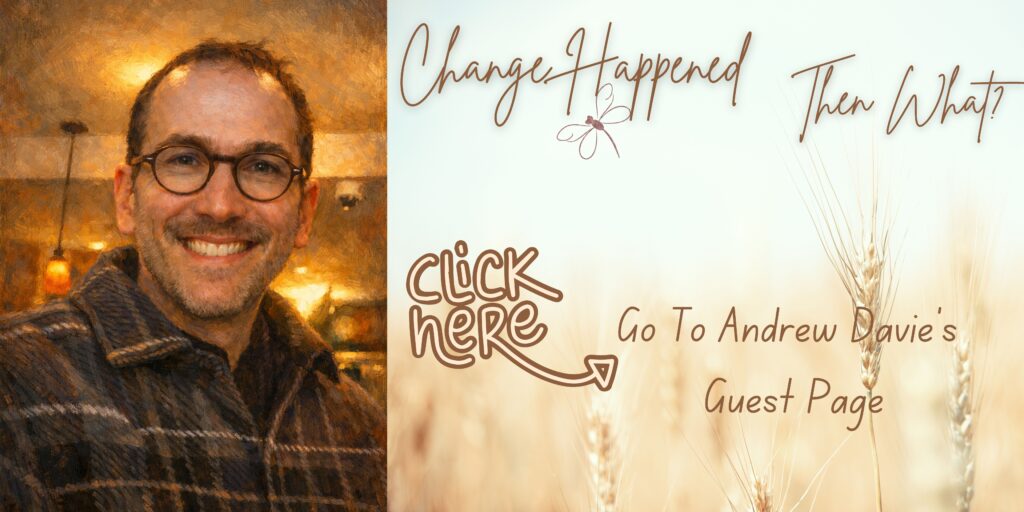
That’s exactly what happened in my recent conversation with Andrew Davie. What began as an ordinary trip to the airport quickly turned into a life-threatening brain aneurysm that forced him to rebuild his life from the ground up. The physical recovery alone took months. Yet the emotional recovery took something deeper: patience, reflection, and eventually… gratitude.
Not necessarily gratitude for the event itself.
But gratitude for what the experience revealed.
Learning to Let Go of the Map
When something unexpected changes your life, your first instinct is often to return to what you knew before. You want to get back to the plan. Back to the identity you built. Back to the version of life that once made sense.
And yet, sometimes the real work begins when we realize that the old map no longer applies.
For Andrew, surviving a brain aneurysm didn’t just change his health. It changed the way he saw his life. Slowly, he began to understand that fulfillment doesn’t always come from forcing life into the shape we imagined.
Instead, it often comes from learning how to align ourselves with where we are.
This doesn’t mean giving up.
Rather, it means letting life teach us something new.
The Hidden Gift of Hard Experiences
None of us wish for the hardest moments in life. Illness, loss, unexpected setbacks — these experiences can feel unfair and disorienting. Nevertheless, they often carry a strange kind of clarity.
They strip away the noise.
They reveal what actually matters.
And sometimes they guide us toward a path we might never have chosen, but ultimately needed.
Andrew’s journey eventually led him to become a counselor, helping others navigate difficult life transitions. Along the way, he also cared for his mother during her battle with ALS — another reminder that life’s most meaningful moments are often rooted in connection and compassion.
Looking back, the life he lives today is not the one he originally planned.
However, it’s a life he now approaches with deep gratitude.
Gratitude for the Unexpected
Gratitude doesn’t always mean being thankful for what happened.
Instead, it can mean appreciating what we learned along the way.
Gratitude for the perspective we gained.
Gratitude for the resilience we discovered.
Gratitude for the relationships that became stronger through hardship.
In many ways, the most powerful form of gratitude is recognizing that even when life veers off course, we are still capable of building something meaningful.
We may not control the events that shape our lives.
But we do have the ability to shape the way we respond.
Navigating Without a Map
During our conversation, Andrew shared a piece of wisdom that stayed with me:
“Instead of bending things to your will, try to align yourself with how things are.”
It’s a simple thought. Yet it holds a profound truth.
We don’t always need to know exactly how life will unfold in order to live a good one.
Sometimes the best thing we can do is move forward with curiosity, humility, and gratitude for the lessons we’ve been given.
Because when the map disappears, we often discover that something deeper has been guiding us all along.